Research Highlights
Therapeutic antibodies: A plant delivers the sugars
Functional Glycomics (14 December 2006) | doi:10.1038/fg.2006.6Standfirst
A genetically engineered aquatic plant, Lemnaminor, delivers therapeutic monoclonal antibodies bearing structurally homogenous N-glycans.
Copyright © Nature Publishing Group
The use of monoclonal antibodies (mAbs) for the treatment of cancer and other diseases has been steadily increasing in recent years. Effector function is crucial for successful treatment with many mAbs and is highly dependent on the structure of the asparagine-bound glycans (N-glycans) attached to the antibody. The complexity of N-glycans attached to recombinant mAbs is one of the distinguishing features separating protein expression systems. Chinese hamster ovary (CHO) cells and plants produce mAbs containing N-glycans with potentially immunogenic fucose and xylose sugars. Cox and colleagues now describe in Nature Biotechnology the successful production of a mAb — MDX-060, an anti-CD30 antibody designed for Hodgkin lymphoma treatment — with an optimized glycan structure in the aquatic plant Lemna minor that contains no detectable fucose or xylose sugars.
To prevent the addition of fucose and xylose to the plant N-glycans, the authors transformed the plant with a chimeric gene encoding an RNA interference sequence that silencesendogenous-1,3-fucosyltransferase and-1,2-xylosyltransferase genes. The mAb produced by this plant was designated MDX-060 LEXopt and was compared with MDX-060 LEX mAb from wild-type L. minor plants and MDX-060 CHO produced in CHO cells.
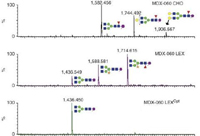
Mass spectrometry analysis confirmed that the mAb from the MDX-060 LEXopt did not contain fucose or xylose and that approximately 96% of the glycans consisted of a single major N-glycan structure. In the case of MDX-060 LEX, this structure contributed only 8% to the total amount of glycans found on the antibody, the remaining glycans being fucosylated or xylosylated, while MDX-060 CHO revealed an even higher level of N-glycan heterogeneity.
This glycan optimization influenced the effector function of the mAbs: whereas the antigen binding properties of the three mAbs were similar, the MDX-060 LEX antibody had between 15 and 27 times higher affinity for various receptor ligands on target cells, and between 20 and 35 times higher cytotoxicity than MDX-060 CHO.
Building on the practical advantages of the L.minor expression system, Cox and colleagues have managed to both optimize the glycosylation and enhance the homogeneity of antibodies produced by the plant. L. minor may prove a useful species to further improve the production of therapeutic mAbs.