Research Highlights
N-glycan synthesis: A lethal lack of trimming
Functional Glycomics (18 January 2007) | doi:10.1038/fg.2007.3Standfirst
An absence of mannose-trimming Golgi  1,2 mannosidase-IB causes defects in lung development and neonatal lethality in mice.
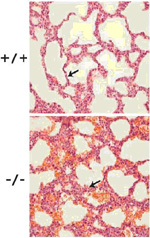
Copyright © 2006 ASBMB
During the initial stages of N-glycosylation, mannose-rich oligosaccharides are transferred to polypeptides, and mannose residues are removed before further sugars are added by various glycosyltransferases. Three Golgi 1,2-mannosidases (IA, IB and IC) participate in this trimming, and until now the physiological consequences of a deficiency of any of these mannosidases have been unknown. Tremblay et al. now show in The Journal of Biological Chemistry that a lack of IB in mice causes defects in lung development resulting in neonatal lethality.
The authors used northern blots and in situ hybridization to show that IA, IB and IC display different patterns of expression in embryonic and adult mouse tissues. Tremblay et al. created an 1,2-mannosidase IB knock-out (IB-/-) mouse that showed complete neonatal lethality. Although the mice appeared normal at birth, they died of respiratory distress within several hours.
Histological examination of tissues from the IB-/- mice revealed abnormalities only in the lungs. The final stage of lung development was delayed the IB-/- mice compared to wild type mice, alveolar hemorrhaging occurred and the alveolar air space was diminished. Tremblay et al. then showed that the only difference observed in the lungs of null mice was the disappearance of lectin staining specific for highly branched complex N-glycans from a subset of bronchiolar epithelial cells. Using mass spectrometric analyses, no major global N-glycan changes were found in the lung or other tissues of IB-/- mice, further indicating that the glycan changes were restricted to very few glycoproteins, most likely in a subset of lung epithelial cells.
By delineating the cellular and molecular effects of IB deficiency, Tremblay et al. contribute to a key aim of glycobiology: attributing ontogenetic and tissue-specific functions to glycan structures.