Research Highlights
Glycosylation disorders: Spotting a glycoprotein's cavities
Functional Glycomics (11 October 2007) | doi:10.1038/fg.2007.42Standfirst
Quadrupole ion trap mass spectrometry allows identification of unoccupied N-glycosylation sites in glycoproteins, revealing a relationship between glycosylation site occupancy and symptom severity in congenital disorders of glycosylation.
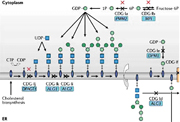
The complexity of the CDG subtypes (detail showing CDG type-I). Click here for the full figure and more information.
Congenital disorders of glycosylation (CDG) encompass a group of illnesses characterized by developmental retardation, seizures and multi-organ defects. CDGs are caused by N-glycosylation defects stemming from abnormalities in N-glycosylation site occupancy (CDG type-I) or N-glycan trimming and elongation (CDG-type II). The abundant plasma protein transferrin, which is normally fully glycosylated, can be used as an indicator to detect protein underglycosylation. This approach has uncovered twelve distinct genetic defects that cause CDG-I. In Molecular and Cellular Proteomics, Hülsmeier et al. now establish for the first time a relationship between N-glycosylation site occupancy and CDG-I disease severity.
The authors grouped the CDG-I patients in three classes according to the severity of the clinical symptoms. Next, Hülsmeier et al. analyzed 28 serum samples of people with healthy and CDG-related disease conditions by quadrupole ion trap mass spectrometry (MS). Before subjecting the samples to the MS analysis, the N-glycans were enzymatically removed and the resulting aspartates to which the glycans were attached were isotopically labeled, allowing the identification of glycosylation sites by the sensitive quadrupole MS assay.
Transferrin has two asparagine residues (N413 and N611) that are potential targets for N-glycosylation. In healthy humans, both sites were shown to be glycosylated at 98 to 100% frequency. However, in CDG-I patients, N413 was occupied at 70 to 96% and N611 down to 41% frequency. This finding indicates that N611 is a more sensitive gauge of systemic defects in N-glycosylation. Statistical analyses established that symptom severity and N611 underglycosylation were indeed correlated. In contrast to CDG-I patients, glycosylation site occupancy in CDG-II patients was unchanged compared to healthy samples, which lends further support to the notion that the glycosylation defects of CDG-II are related to glycan elongation and trimming instead of site occupancy.
The study of Hülsmeier et al. shows a groundbreaking correlation between reduced transferrin glycosylation and CDG-I symptom severity. As the authors also observed a significant correlation between underglycosylation and alcoholism, the procedure presented in the current study may establish a reliable and precise technique to demonstrate that reduced glycosylation site occupancy is a feature of other illnesses as well.