Featured Articles
Sepsis, coagulation, metastasis: Endogenous lectin receptors unveiled
Functional Glycomics (12 June 2008) | doi:10.1038/fg.2008.26Standfirst
The liver Ashwell receptor clears desialylated von Willebrand factor and platelets, whereas the mannose receptor on lymphatic vessels promotes the migration of lymphocytes and the lymphatic spread of tumor cells.
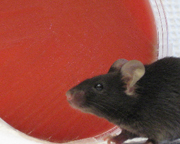
The Ashwell receptor saved the live of the mouse shown here – it likely does the same for us. Image by courtesy of Dr Jamey D Marth, Department of Cellular and Molecular Medicine, University of California and Howard Hughes Medical Institute.
The Ashwell receptor (AR) and the mannose receptor (MR) belong to the group of endogenous human lectin receptors. The AR clears therapeutically administered glycoproteins (such as erythropoietin) from the blood, which carry desialylated — and therefore potentially immunogenic — glycans. The AR is formed by two genes encoding separate proteins that often combine to form the asialoglycoprotein receptor (Asgr1 and Asgr2); despite its location on the luminal surface of hepatocytes, endogenous ligands for the AR have not previously been described. In contrast, the MR is known to clear various endogenous serum glycoproteins, and on macrophages it plays a role in pathogen recognition and antigen presentation. The MR is also present on the endothelium of lymphatic vessels that drain the lymph from tissues; however, a respective function is unknown by now. Studies by Marttila-Ichihara et al. in Blood and Grewal et al. in Nature Medicine reveal new functions for both endogenous lectin receptors.
Grewal et al. noted that a lack of Asgr1 compensated increased bleeding and lower platelet counts in mice also lacking the  2,3-sialyltransferase ST3Gal-IV (St3gal4
 / mice), which is known to transfer sialic acid to molecules regulating hemostasis. This suggested that the desialylated von Willebrand factor (vWF), a chief player in coagulation, may bind to the AR and then be removed from the blood stream. This idea was confirmed when Grewal et al. found that vWF occurrence and half-life were increased in Asgr1-deficient mice, reduced in ST3Gal4/ mice and reverted to normal if both deficiencies were combined.
A low count of platelets (thrombocytopenia) occurs during severe sepsis caused by infection by bacteria such as Streptococcus pneumoniae. Thus, the authors suspected that the AR may also clear from circulation platelets which have a propensity to form blood vessel thrombi. Indeed, Grewal et al. found that Asgr1-deficient mice infected with S. pneumoniae did not develop thrombocytopenia and died earlier with severe blood vessel clogging (coagulopathy) than wild-type mice. Moreover, the authors detected a similar difference upon infection with S. pneumoniae lacking the bacterial NANA sialidase. These results establish that the clearance of desialylated vWF and platelets is an endogenous function of the AR in response to infection. Contrary to previous assumptions that thrombocytopenia is caused when coagulation factors are consumed during a bacterial infection, thrombocytopenia rather appears to be a protective effect exerted by the AR during an infection.
Lymphatic vessels are used by immune cells to migrate from sites of disease to organs of the lymph system. However, melanoma and other types of tumor cell use these vessels for metastatic spread. Marttila-Ichihara et al. observed that lymphocytes injected into mice lacking the MR migrated more slowly than in wild-type mice, whereas migration from blood vessels to sites of inflammation or lymph nodes (homing) was unaffected. Notably, when Marttila-Ichihara et al. subcutaneously injected luciferase-expressing melanoma cells, they found that primary tumors grew faster but metastases developed more slowly in knockout than in wild-type mice. In vitro binding confirmed that the MR supports migration of lymphocytes and tumor cells, and hence promotes metastatic development of tumors that spread by the lymphatic system. Future studies will reveal whether cell migration to lymphatic organs is orchestrated by receptor–glycan interaction in a similar way as known from the homing process.