Featured Articles
Neutrophil trafficking: CXCR2's icing on the cake
Functional Glycomics (10 July 2008) | doi:10.1038/fg.2008.31Standfirst
Sialylation of the neutrophil CXCR2 receptor is required for its interaction with the chemokines CXCL8 and CXCL1, which induces neutrophil arrest and prepares neutrophil extravasation.
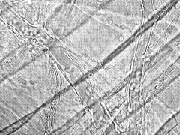
Leukocyte rolling and adhesion as seen in inflamed postcapillary cremaster muscle venules in vivo. Image by courtesy of Dr Markus Sperandio, Walter Brendel Center for Experimental Medicine, Ludwig-Maximilians-Universität Munich.
During an inflammatory response immune cells stop flowing with the blood stream and start rolling on endothelial cells by making and breaking protein-glycan interactions. Rolling leukocytes make intimate contact with the endothelium; this promotes the interaction of endothelial bound chemokines such as CXCL8 (interleukin 8) and CXCL1 (chemokine (C-X-C motif) ligand 1) with CXCR2 (interleukin 8 receptor) on leukocytes which leads to integrin activation and subsequent leukocyte adhesion to the inflamed endothelium. This cascade of events is a prerequisite for the recruitment of leukocytes into inflamed tissue. Sialic acid transferred by the sialyltransferase ST3Gal-IV is known to terminate leukocyte surface glycans, and research by Frommhold et al. published in the Journal of Experimental Medicine now shows that a lack of the terminal sialic acid mimics a loss of CXCR2 in vivo.
The authors used an easily accessible group of vessels — the cremaster muscle microcirculation located in the scrotal sac — to analyze leukocyte rolling and adhesion in mice lacking ST3Gal-IV (ST3Gal-IV-/- mice). These knockout mice displayed a reduction in the number of neutrophils adhering to inflamed endothelium, which paralleled a similar reduction found in mice lacking CXCR2 expression on hematopoietic cells. In addition, injection of CXCL1 and CXCL8 strongly increased the number of adhering leukocytes in cremaster muscle venules of wild type mice, whereas no change was observed in ST3Gal-IV-/- mice.
Multiple in vitro assays underscored the in vivo evidence of a role for sialylation in neutrophil arrest. Flow cytometry showed a reduction in CXCL8 binding to CXCR2 after sialic acid was enzymatically removed from wild-type neutrophils. In a flow chamber containing CXCL1 and two further neutrophil interaction partners, significantly fewer ST3Gal-IV-/- neutrophils adhered to the chamber wall than wild-type neutrophils. Interaction between CXCR2 and CXCL1 is also required for leukocyte migration crossing endothelial walls, hence the authors observed reduced ST3Gal-IV-/- neutrophil migration through an endothelial layer in a transwell assay.
The results of this study show for the first time that protein-glycan interactions not only guide leukocyte rolling but also induce neutrophil arrest. As ST3Gal-IV and further glycosyltransferases have been shown to be specific for the immune system, glycosylation tuning as treatment for diseases of the immune system might become a therapeutic option.