|
Overall Goal and Specific Objectives The overarching goal of the program is to: The scientific focus and goal of the CFG is the elucidation of the functions of glycan-binding proteins (GBPs) that mediate biology at the surface of a mammalian cell. To this end, the Consortium is integrating the efforts of Scientific Cores and Participating Investigators to address for each GBP the following Specific Aims:
Organization 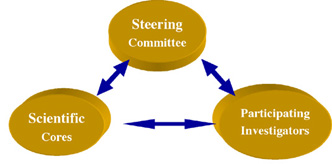
Three major components comprise the Consortium for Functional Glycomics: the Steering Committee, the Cores (an Administrative Core and seven Scientific Cores), and the Participating Investigators. Each major component of the Consortium interacts directly with the other two. The Steering Committee consists of 11 members that meet every other week. It has overall responsibility for setting the scientific direction and the budget of the Consortium, and ensuring that information and resources generated by the program are efficiently disseminated within the program and to the public. It also approves priorities and milestones for each of the Scientific Cores. Setting yearly milestones involves substantial input from the Cores and Participating Investigators. A variety of resources and services produced by the Scientific Cores are distributed to the Scientific Cores and Particpating Investigators for use in performing experiments that address the Specific Aims of the Consortium. Six of the seven Scientific Cores (Cores C-H; see list below) generate material resources, new technologies, and a platform of information that enable progress toward the overall goals.
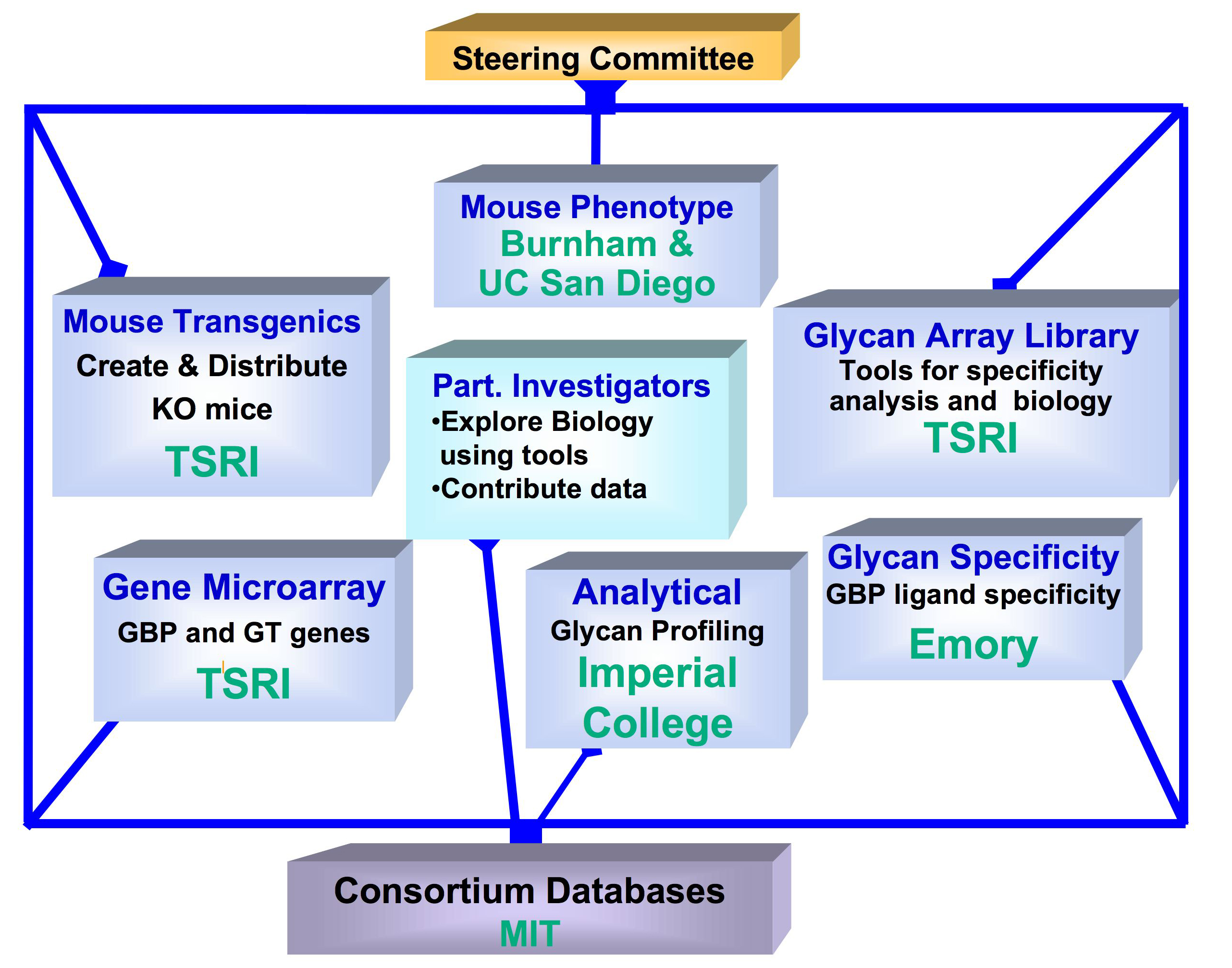
Each Core has a Coordinator who is also a member of the Steering Committee and who is responsible for its oversight. The day-to-day operations of each Core are the responsibility of a Core Director. Core Directors are key to the success of the Cores; they attend Steering Committee meetings as deemed appropriate. The participation of the Coordinator and Director of each Core in Steering Committee meetings facilitates the communication of relevant decisions to Core personnel. The third component of the Consortium are the Participating Investigators, each of whom has a program of funded research within the scope of the Consortium. In return for resources, Participating Investigators agree to accept responsibility for achieving one or more Specific Aims and to provide the data to the Consortium database. The Consortium currently has more than 250 Participating Investigators at more than 150 institutions. Several Participating Investigators have 'bridging grants' that bridge their research to the goals of the Consortium. Investigators interested in joining the Consortium as a Participating Investigator are encouraged to fill out an application posted on the Consortium website. All qualified investigators are accepted as members. The Participating Investigators are divided into subgroups based on the relevance of their research to the GBP families that are the focus of the Consortium. These subgroups are: C-type lectin, Siglec (Sialic acid-binding Ig-like lectin), Galectin, and TCR/CD1/MHC. An additional 'Other' subgroup provides a forum for investigators who do not fall into one of the other four subgroups. These subgroups bring together, and facilitate communication among, investigators working on common problems, and aid the Consortium in identifying priorities for helping that sub-field accelerate progress. Public Dissemination of Results and Plans The public dissemination of plans and results is accomplished in multiple ways. The most visible is through the Consortium website. The site currently provides a wealth of general information about the purpose of the Consortium, its policies for dissemination of information and resources, its progress and future plans. From this site, investigators can also join the Consortium and access resources. The Central Database is the most important mode of accessing detailed program information. The database portal provides access for viewing Consortium Data and Specialty Databases for searching detailed information from public and CFG databases. Raw data and summary data from the four CFG Cores that produce data are accessible through user-friendly interfaces. The menu is available by clicking the red “Consortium Data” button on the home page: The CFG disseminates plans and results at its annual meeting for Participating Investigators, which is open to members of the scientific community who wish to attend and is held following the Annual Meeting of the Society for Glycobiology. Consortium results are being published in journals and a quarterly newsletter, The Consortium Quarterly, is disseminated via email to Participating Investigators and posted on the program website. The Consortium also hosts booths, presents posters and platform presentations and disseminates flyers at scientific meetings and workshops, places advertisements for resources in journals and links to numerous other websites to direct public interest to the CFG. |